Jinani Sooriyaarachchi, PhD
I am a computational neuroscientist and biomedical engineer working at the intersection of AI, neurotechnology, and digital health. My work focuses on turning complex human signals (brain activity, physiological signals, facial behaviour, and other biomarkers) into intelligent, objective measures that can support healthcare decision making. I bring expertise across machine learning, computer vision, biosignal processing, computational neuroscience, and medical technology development, with experience spanning research, product-oriented technology development, and industry collaboration.
I am currently a postdoctoral researcher at the National Research Council of Canada. I graduated with my PhD in February 2025, specialized in Computational Neuroscience and Machine Learning at McGill University, in the Department of Physiology under the supervision of Dr. Curtis Baker. My research is aimed at the long-term objective of understanding the visual processing carried out by an early visual cortex neuron. Towards this end, I develop elaborate machine learning models to estimate the evoked neuronal spiking activities recorded in the primary visual cortex in response to natural image stimuli.
I am particularly interested in building clinically meaningful AI technologies that move beyond proof-of-concept toward real-world deployment. My current work focuses on multimodal, contactless assessment of pain, cognition, and neurological states, with the broader goal of creating scalable technologies that make previously subjective or difficult-to-measure aspects of human health more objective. I enjoy working at the intersection of science, engineering, and innovation turning complex problems into practical technologies with measurable impact.
Main Research Interests:
- Brain/Human Computer Interface (BCI,HCI)
- Machine Learning
- Computational Neuroscience
- Bio-signal Processing
- Computational Modelling
- Medical Technology Development
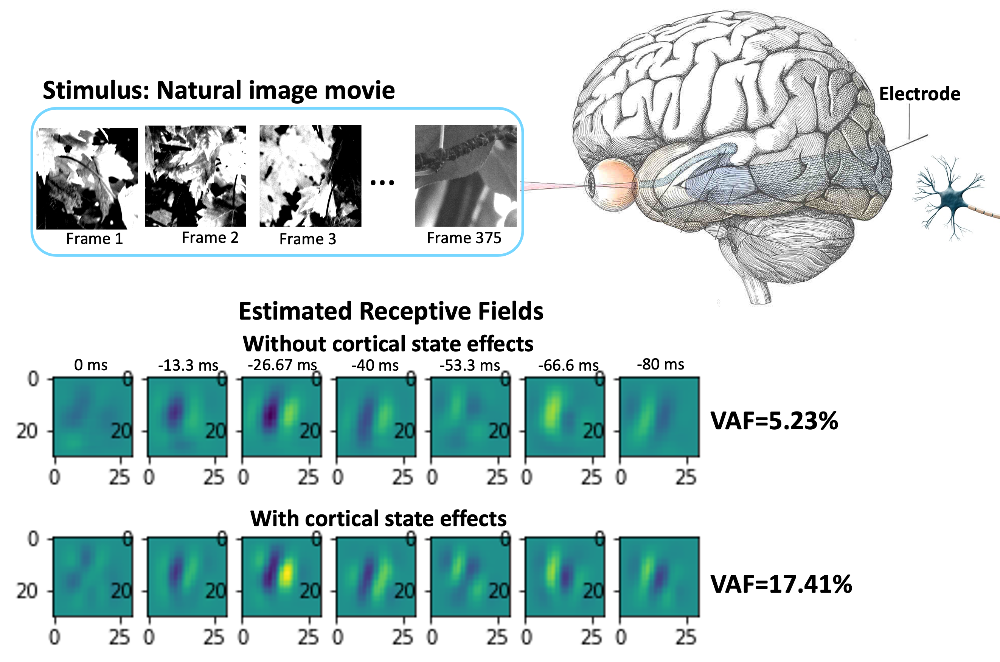 In the field of visual neuroscience, computational models of a visual cortex neuron are useful for understanding its functional role within the mammalian brain. A successful model will be able to accurately predict a neuron's responses to any visual image. Understanding the activity of a single visual cortex neuron is especially challenging for model development because brain responses vary for repeated presentations of the same stimulus as a result of "brain-state" fluctuations (e.g., sleep, arousal, attention) that can affect large populations of neurons.
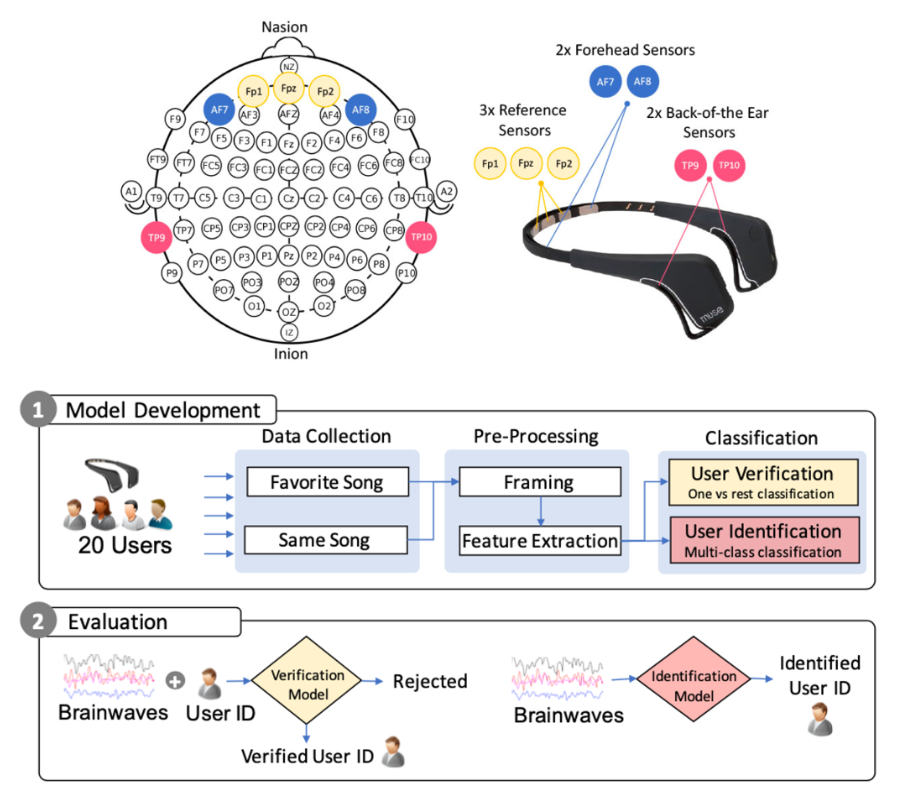 MusicID is an authentication solution for smart devices that uses music-induced brainwave patterns as a behavioral biometric modality. This work experimentally analyse data collected from real users whilst they are listening to two forms of music: 1) a popular English song and 2) individual's favorite song and shows that an accuracy over 98% for user identification and an accuracy over 97% for user verification can be achieved by using data collected from a 4-electrode commodity brainwave headset. Further MusicID shows that a single electrode is able to provide an accuracy of approximately 85% and the use of two electrodes provides an accuracy of approximately 95%. As already shown by commodity brain-sensing headsets for meditation applications, including dry electroencephalogram electrodes in smart headsets are feasible and MusicID has the potential of providing an entry point and continuous authentication framework for upcoming surge of smart devices mainly driven by augmented reality (AR)/virtual reality (VR) applications.
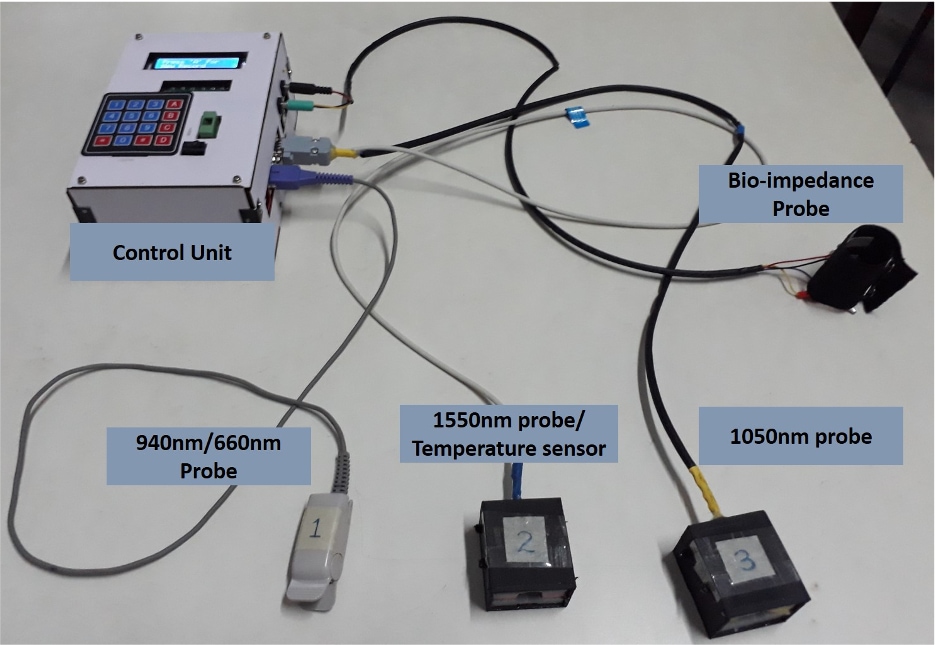 Diabetes mellitus is a major health problem which requires regular glucose monitoring and invasive blood glucose measuring systems with acceptable accuracies are currently used for these measurements. Several non-invasive
blood glucose measurement techniques are reported in research literature, but most of them are not commercially available due to low accuracy or dependency on individual physiological parameters. This work presents a hybrid technique to measure blood glucose levels non-invasively using a combination of multi-wavelength near infrared (NIR) spectroscopy and bio-impedance spectroscopy. Physiological parameters of individuals and other environmental factors that affect non-invasive glucose measurements have been identified and compensated to make the device work on any person without the requirement of complicated further calibrations. The measured parameters, along with the glucose levels of human subjects obtained from a commercial blood glucose meter is used to train a machine learning model (Random Forest regression algorithm). The trained system (with a training set of 315 data samples and a a test set of 80 data samples) predicted the blood glucose levels non-invasively with an accuracy of 90.7%.